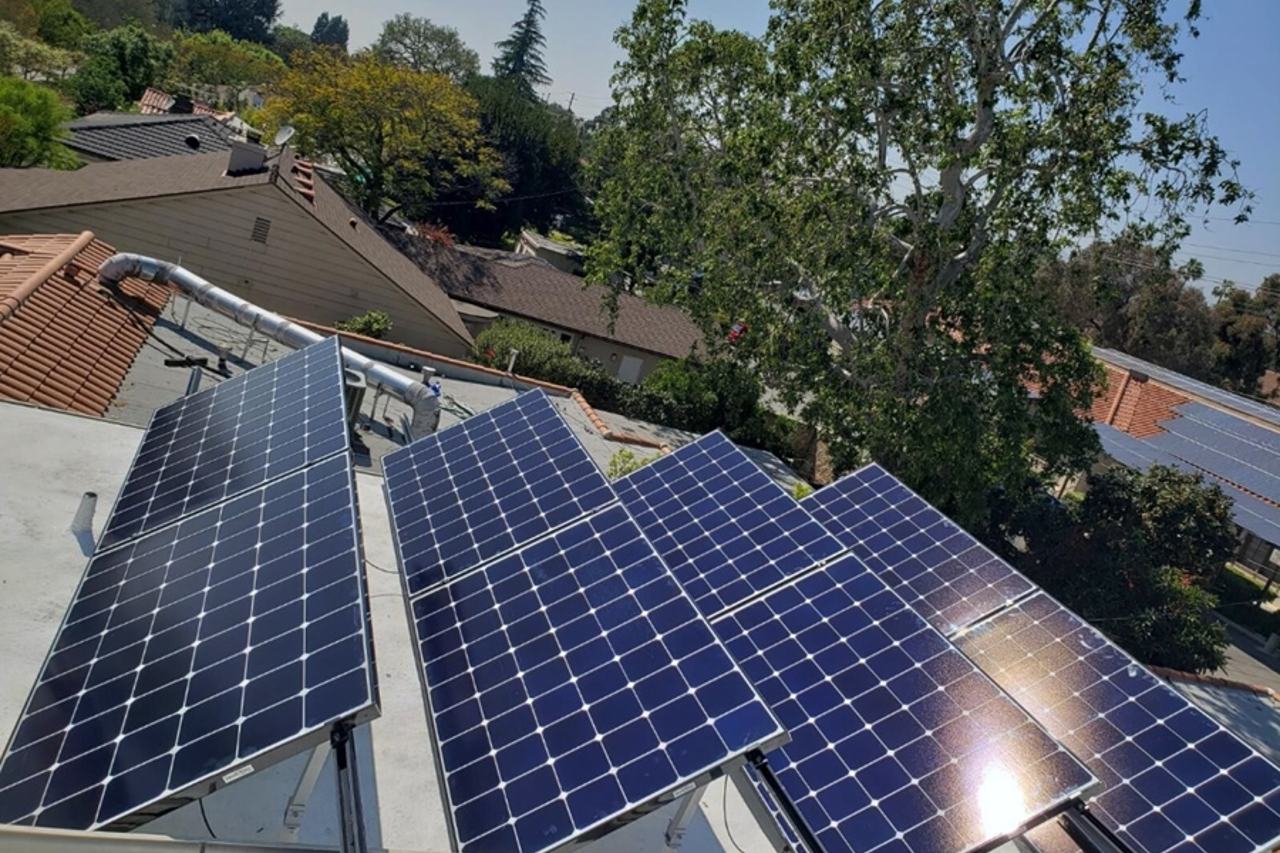
How Much Does Solar Installation Cost in Southern California?
A residential solar installation in Southern California will often cost approximately $22,000 to $42,000 with a representative battery and equipment allowance, before financing charges or unusual electrical and roofing work. The price for your home will depend on the system size, equipment, roof, electricity use, utility plan, and whether you add a battery.
The Quick Answer
Most residential solar systems in Southern California fall somewhere between 5 and 10 kilowatts. Using a broad planning range of approximately $2.50 to $3.50 per watt, plus a representative battery and equipment allowance, that puts a typical project at roughly $22,500 to $45,000.
That range is useful for early planning, but it is not a quote. A smaller, uncomplicated roof may cost less. A larger system with premium equipment, battery storage, a main electrical panel upgrade, roofing work, or difficult access may cost substantially more.
There Is No Single Price for a Southern California Solar System
Asking how much solar costs is a little like asking how much it costs to remodel a kitchen: the answer depends on the property, the goals, the materials, and the amount of work required.
Two homes on the same street can receive very different solar proposals. One homeowner may have a simple south-facing roof, modest electricity use, and an electrical panel that is already solar-ready. Another may have multiple roof planes, afternoon shade, an electric vehicle, a pool, a 200-amp panel upgrade, and a goal of adding backup battery power.
At HPM Solar, we begin with the home's actual energy use and the customer's goals. We then determine whether solar makes economic sense, how large the system should be, and which equipment and financing structure fit the property. The objective is not to put the maximum number of panels on every roof. It is to build a thoughtful energy solution that provides measurable value.
Planning Cost Per Watt
A broad solar-only planning range, before storage and other project equipment. Actual proposals vary.
Common System Range
Many homes fall in this range, but electricity use determines size.
Long-Term Production
Solar should be evaluated as a long-term home energy investment.
Analysis Per Home
Your utility history and roof determine the appropriate design.
Average Solar Installation Cost in Southern California
A typical residential solar-plus-storage installation can range from the low $20,000s to more than $40,000 before major property upgrades.
The table below shows illustrative ranges using an estimated solar-only price of approximately $2.50 to $3.50 per watt plus a representative $10,000 battery and equipment allowance. These numbers are intended to help homeowners understand how system size affects price—not to replace a property-specific proposal.
| System Size | Approximate Solar-Plus-Storage Cost | May Fit a Home With | Important Note |
|---|---|---|---|
| 4 kW | $20,000–$24,000 | Relatively low electricity use | Roof orientation and panel wattage affect panel count. |
| 5 kW | $22,500–$27,500 | Low-to-moderate electricity use | May not be sufficient for a future EV or electrification. |
| 6 kW | $25,000–$31,000 | Moderate electricity use | A common planning example, not a universal system size. |
| 8 kW | $30,000–$38,000 | Moderate-to-high electricity use | May require multiple roof planes depending on the property. |
| 10 kW | $35,000–$45,000 | High use, EVs, pools, or larger homes | Utility consumption and available roof space must support it. |
| 12 kW | $40,000–$52,000 | Very high residential electricity use | Electrical upgrades and permitting may become more involved. |
Estimates include a representative $10,000 battery and equipment allowance, but do not include roof replacement, structural repairs, trenching, detached structures, extensive electrical work, financing charges, or other site-specific requirements.
What Does “Cost Per Watt” Mean?
Solar installers commonly compare project prices using cost per watt. The calculation is simple: divide the total solar contract price by the system's direct-current capacity in watts.
A $20,400 solar-only proposal for an 8,000-watt system equals $2.55 per watt.
Cost per watt is helpful when comparing systems of different sizes, but only when the proposals include a comparable scope. A lower price per watt is not automatically a better value if the proposal uses different equipment, excludes necessary electrical work, has weaker warranties, or is being offered by a company that will not provide long-term service.
Compare more than the price
- Panel manufacturer, model, wattage, and warranty
- Inverter type and equipment warranty
- Roof attachment and waterproofing method
- Workmanship and roof penetration warranty
- Monitoring platform and ongoing support
- Permit, engineering, and utility application costs
- Main-panel or electrical work included in the proposal
- Cash price compared with the financed contract price
- Production assumptions and annual degradation
- Battery equipment, usable capacity, and backup configuration
Factors That Affect Solar Installation Cost
The panels are only one part of a complete solar project. Design, engineering, electrical equipment, roof access, permitting, labor, and energy-storage choices all influence the final investment.
Electricity Consumption
A home using 12,000 kilowatt-hours per year generally needs a larger system than a home using 6,000. Twelve months of utility data helps account for seasonal cooling, pool equipment, and changing usage.
Roof Direction and Pitch
Direction, slope, available area, setbacks, vents, and the number of usable roof planes affect how many panels can fit and how much energy the array may produce.
Roofing Material
Asphalt shingle, concrete tile, clay tile, flat roofs, and metal roofing require different attachment methods, labor, and waterproofing considerations.
Shade and Obstructions
Trees, chimneys, neighboring buildings, roof geometry, and nearby mountains can reduce production or require a more complex system design.
Panel and Inverter Selection
Higher-wattage panels, premium product lines, microinverters, optimizers, and specialized monitoring equipment can change both price and system capabilities.
Electrical Panel Condition
Some homes need a main service-panel upgrade, subpanel work, relocation, meter changes, or other electrical improvements before solar can be interconnected.
Battery Storage
Battery size, brand, number of units, backup loads, gateway equipment, and whole-home versus essential-load backup can add significantly to the project.
Permitting and Utility Requirements
Requirements differ by city, building department, fire authority, and utility. Engineering or plan revisions can affect project cost and timing.
Future Energy Needs
An upcoming electric vehicle, heat pump, pool, addition, or accessory dwelling unit may change the recommended design. Planning ahead can help prevent undersizing.
Estimate a Preliminary Solar Price Range
Use the calculator below to explore how system size, installed cost per watt, and battery storage can affect a preliminary project budget. It begins with a representative $10,000 battery allowance.
Your roof, utility use, equipment, electrical service, backup configuration, permitting, and financing terms must be reviewed before an accurate price can be prepared.
How Much Does a Solar Battery Add?
A professionally installed home battery commonly adds approximately $10,000 to $20,000 or more per unit, depending on the battery, usable capacity, installation complexity, electrical equipment, and backup design.
Installing two batteries does not always mean simply doubling the price of one battery. Some shared equipment and labor may already be included, while larger backup systems can also require additional load-management equipment or electrical work.
Explore Solar Battery StorageA battery may provide value through:
- Using more solar energy after the sun goes down
- Reducing electricity purchased during costly evening periods
- Providing backup power during qualifying outages
- Supporting selected essential circuits or broader home loads
- Reducing reliance on low-value daytime grid exports
The correct battery configuration depends on whether your priority is bill management, emergency backup, self-consumption, or a combination of those goals.
Solar Incentives Available in Southern California
Incentive availability changes over time and can depend on the customer, property, utility territory, income, equipment, and installation date. Current eligibility should always be confirmed before making a purchase decision.
The federal Residential Clean Energy Credit previously provided a 30% credit for qualifying residential solar and battery property placed in service from 2022 through 2025. Under current federal guidance, it is not available for residential property placed in service after December 31, 2025.
Utility Bill Credits
Customers served by California's major investor-owned utilities may receive credits when unused solar electricity is exported to the grid under the applicable Solar Billing Plan or Net Billing Tariff.
Exported electricity is generally not valued the same as electricity purchased from the utility. For many homeowners, the greatest financial value comes from using solar energy in the home when it is produced and strategically storing energy for later use.
Battery and Resiliency Programs
California programs may periodically provide battery incentives for eligible customers, including certain income-qualified households, customers with qualifying medical needs, or properties exposed to elevated outage risks.
Funding, eligibility rules, and incentive amounts can change. HPM Solar can help identify programs that may be relevant to the property, but final eligibility is determined by the administering program.
Local Utility Programs
Homeowners served by a municipal utility may have different billing rules or programs than customers served by Southern California Edison, San Diego Gas & Electric, or Pacific Gas and Electric.
This is one reason city and utility territory matter when estimating solar savings.
Business and Nonprofit Incentives
Commercial, nonprofit, governmental, and tax-exempt projects may have access to a different set of federal tax provisions, direct-pay opportunities, depreciation rules, or local programs.
Those projects should be evaluated separately from residential solar and reviewed with qualified tax and financial professionals.
HPM Solar does not provide tax, legal, or accounting advice. Consult a qualified professional to determine whether an incentive or tax provision applies to your circumstances.
How the Solar Billing Plan Affects Value
New solar customers of California's large investor-owned utilities are generally placed on the Net Billing Tariff, often called the Solar Billing Plan or informally “NEM 3.”
Under this structure, the electricity your home consumes directly from its solar system can be more valuable than electricity exported to the grid in the middle of the day. Export compensation changes by time and is generally below the retail price paid for utility electricity.
This has changed how a thoughtful Southern California solar system should be designed. Rather than focusing only on annual production, homeowners should consider when they use electricity and whether a battery can shift daytime solar production into evening hours.
Ways to improve self-consumption
- Run pool equipment during solar-production hours
- Charge an electric vehicle during the day when practical
- Pre-cool the home before more expensive evening periods
- Schedule appliances during daytime production
- Store excess solar electricity in a battery
- Size the system around realistic usage and export values
The right strategy depends on your utility rate, household schedule, energy use, and equipment.
Solar Financing Options
The best payment method depends on available cash, borrowing costs, expected ownership period, tax circumstances, and whether the priority is maximum lifetime savings or a manageable monthly payment.
Cash Purchase
The homeowner purchases the solar system outright and owns the equipment from the beginning.
Potential Advantages
- No loan interest
- No dealer fee
- Usually the lowest total cost
- Simpler ownership structure
Considerations
- Highest upfront expense
- Uses cash that could be used elsewhere
- Payback depends on actual bill savings
Solar Loan
A loan spreads the project cost over a defined term. Loans may be secured or unsecured and can carry substantially different interest rates and fees.
Potential Advantages
- Lower upfront cash requirement
- Customer typically owns the system
- Predictable scheduled payments
Considerations
- Interest increases total project cost
- Low advertised rates may include dealer fees
- Long terms may outlast expected ownership
Solar Lease
A third party generally owns the equipment while the homeowner pays a scheduled amount for its use.
Potential Advantages
- May require little upfront payment
- Maintenance responsibilities may differ
- Can simplify initial adoption
Considerations
- Homeowner may not own the system
- Escalators can increase payments
- Home-sale transfer terms matter
Power Purchase Agreement
Under a PPA, a third party generally owns the system and the homeowner purchases the electricity it produces at a contracted rate.
Potential Advantages
- May reduce upfront expense
- Payment relates to energy production
- Ownership duties may remain with provider
Considerations
- Long-term contract
- Rate escalators may apply
- Transfer and buyout terms require review
Ask for the solar-only cash price, financed contract price, annual percentage rate, loan term, total of payments, prepayment rules, and every fee. A low monthly payment can conceal a long loan term or a substantial dealer fee.
Solar Payback Period and Return on Investment
Solar ROI is not determined by the installation price alone. It is determined by the relationship between what you invest and how much utility expense the system helps you avoid over time.
The simple payback period estimates how long it may take cumulative bill savings to equal the initial net investment. For example, a $34,000 solar-plus-storage system producing an average of $3,000 in annual utility savings would have a simplified payback of a little over 11 years.
Real-life projections are more nuanced. Production changes by season, panels gradually degrade, utility prices and rate plans change, maintenance may be required, and loan interest can increase the amount invested.
Calculate the Investment
Include the complete cash price or total financed cost, required electrical work, battery storage, and known future expenses.
Project Bill Savings
Model solar production against the utility rate, household usage, daytime consumption, export values, and battery behavior.
Test Different Scenarios
Compare conservative, expected, and optimistic utility-rate and production assumptions rather than relying on one projection.
How Much Could Solar Save?
The examples below demonstrate why the same solar system can provide different financial results for different households. They are not promises or savings guarantees.
Moderate-Use Home
- Average bill: approximately $200 per month
- Smaller or mid-sized solar system
- No battery
- Good daytime electricity use
This homeowner may prioritize a lower upfront investment and maximum direct use of daytime solar production.
High-Use Family Home
- Average bill: approximately $350 per month
- Pool or heavy air-conditioning use
- One electric vehicle
- Potential battery storage
Higher electricity use can create more opportunity for avoided utility purchases, but it also usually requires a larger investment.
Electrified Home
- Average bill: $500 or more per month
- Multiple EVs or electric appliances
- Large solar array
- One or more batteries
The total project may cost more, but replacing a larger amount of expensive utility electricity can improve long-term value.
Is Solar Still Worth It in Southern California?
Solar can still make sense for many Southern California homeowners, but it should not be treated as an automatic recommendation for every property.
The region offers abundant sunshine and many households face high electricity costs. At the same time, today's utility billing rules, financing costs, roof conditions, and the expiration of the former federal residential credit mean that system design and financial analysis matter more than ever.
HPM Solar's approach is to determine whether a homeowner stands to benefit before recommending an installation. That means looking at actual utility history, modeling the property, reviewing future energy needs, and explaining both the costs and limitations.
Solar may be a strong fit when:
- You have consistently high electricity bills
- Your roof has sufficient usable, productive area
- You expect to remain in the property for several years
- You can use substantial electricity during solar hours
- You plan to add an EV or electrify more of the home
- You value battery backup or greater grid independence
- The projected savings justify the complete project cost
Regional Factors That Can Affect Solar Installation Cost
Solar pricing is based primarily on the property and system—not merely the city name. In Southern California, utility territory, permitting, roof construction, electrical service, and household cooling demand can all affect the scope of a project.
Utility and Billing Rules
Rates, time-of-use periods, export compensation, and interconnection requirements differ by utility territory. These details affect savings modeling and whether battery storage may add value.
Roof and Electrical Conditions
Tile roofs, multiple roof planes, shading, limited usable space, and electrical-panel upgrades can change design, labor, and equipment requirements.
Permitting and Inspections
Local building and fire requirements can affect plan review, equipment placement, engineering, and the project timeline. A site-specific analysis identifies the applicable requirements.
Each city page should provide genuinely useful local information—not simply repeat this guide with a different city name. Strong city pages can discuss the local building department, utility provider, common roof and housing characteristics, service-area experience, nearby projects, and city-specific solar questions.
How HPM Solar Determines Your Actual Installation Cost
Review Utility History
We review one bill and, preferably, 12 months of electricity data to understand annual usage, seasonal peaks, rate structure, and future energy needs.
Model the Property
We evaluate roof space, orientation, shade, equipment placement, electrical service, and design constraints to develop a realistic system concept.
Build a Custom Analysis
The solar analysis explains the recommended system size, equipment, estimated production, project cost, and potential financial benefits.
Frequently Asked Questions
A residential solar installation with a representative battery and equipment allowance will often cost somewhere between approximately $22,000 and $42,000, although smaller systems may cost less and larger or more complicated projects may cost more. Roofing work, electrical upgrades, financing charges, and difficult installation conditions can increase the total.
Published California averages vary by source and by what is included in the quoted price. A broad planning range of approximately $2.50 to $3.50 per watt can help with early budgeting for a straightforward solar-only system. Compare the complete scope, equipment, warranties, electrical work, and cash price—not only the price per watt.
Under current IRS guidance, the Residential Clean Energy Credit applied to qualifying residential property placed in service from 2022 through December 31, 2025. It is not available for residential property placed in service after December 31, 2025. Homeowners should consult a qualified tax professional and verify current law before relying on any tax benefit.
One professionally installed home battery may add approximately $10,000 to $20,000 or more. The total depends on brand, storage capacity, number of batteries, electrical work, load-management equipment, and whether the system backs up selected circuits or a larger portion of the home.
The number depends on annual electricity usage, panel wattage, roof direction, shade, usable roof area, utility billing rules, and the desired production target. Twelve months of electricity data provides a better foundation than estimating from only one recent bill.
Not necessarily. Customers can still have utility connection charges, non-bypassable charges, taxes, electricity purchases when solar is not producing, or charges related to their rate plan. Actual bills depend on consumption, production, battery use, export credits, and utility rules.
Cash generally produces the lowest total project cost because there is no loan interest or dealer fee. Financing preserves cash and spreads payments over time but can substantially increase the total amount paid. Compare the cash price, financed price, annual percentage rate, term, fees, and total payments.
Payback varies based on system price, financing, electricity rates, annual production, self-consumption, export credits, battery storage, and changes in utility pricing. The correct approach is to model the specific property rather than assume one universal payback period.
An owned solar system may be attractive to buyers because it can reduce future electricity expenses, but the effect varies by property, market, system age, performance, ownership structure, and buyer preferences. Leased systems and PPAs can involve additional transfer requirements.
Start with one recent electric bill and, preferably, 12 months of utility-usage history. It also helps to share plans for electric vehicles, pools, additions, heat pumps, battery backup, or other changes that may increase future electricity consumption.
Last reviewed: July 2026. Solar pricing, utility tariffs, tax laws, and incentive programs can change. Verify current terms before making a financial decision.
Find Out What Solar Would Cost for Your Home
Send HPM Solar a recent electric bill—or preferably 12 months of utility history—and our team can prepare a customized analysis based on your property, usage, equipment needs, and financial goals.